

When a customer buys a piece of jewellery in a physical store, they can view it from every side, see the shine of the metal and stones, and understand its true size.
In an online shop, they do not have that opportunity.
The photographs need to provide as much of that information as possible.
That is why good jewellery photos for e-commerce are not simply attractive images. They need to help the customer understand the product before buying it.
1. The main product photo is the most important
The first image is usually the one shown on the category page, in the online shop search, and often in Google Shopping, Skroutz, marketplaces and adverts.
For most products, the safest option is:
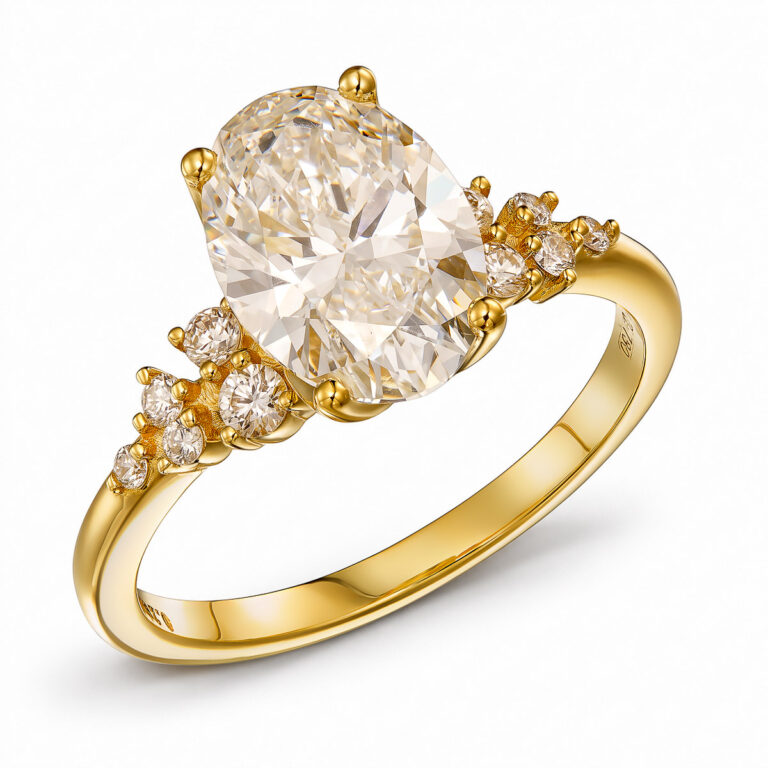
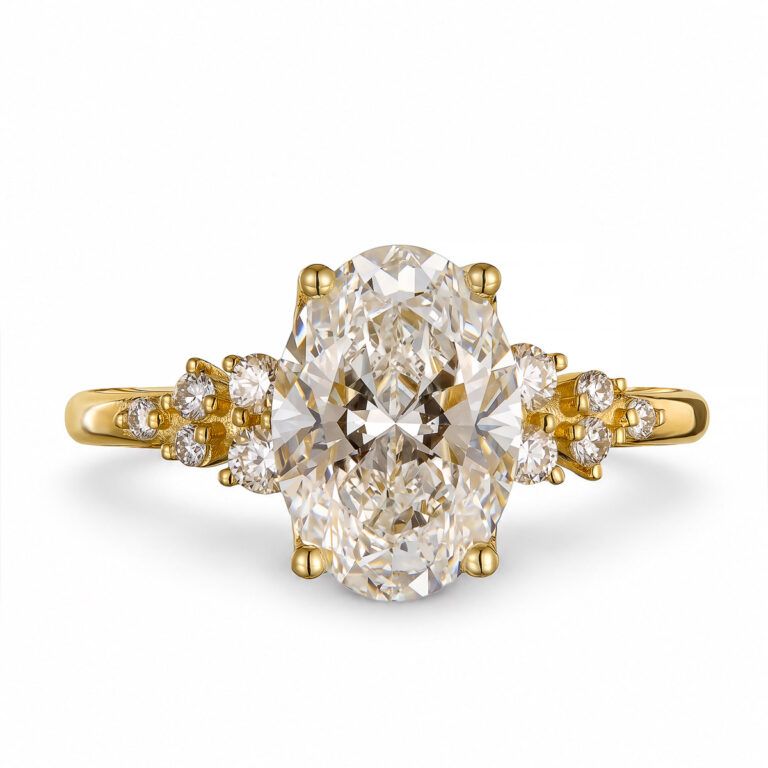
a clean image of the jewellery on a white or very light neutral background.
The product should be shown in full, clearly and without distracting elements.
A white background, however, does not mean a flat-looking photograph.
Gold and silver need the right reflections to show their volume. Stones need contrast and highlights to retain their sparkle and character.
2. One photo is usually not enough
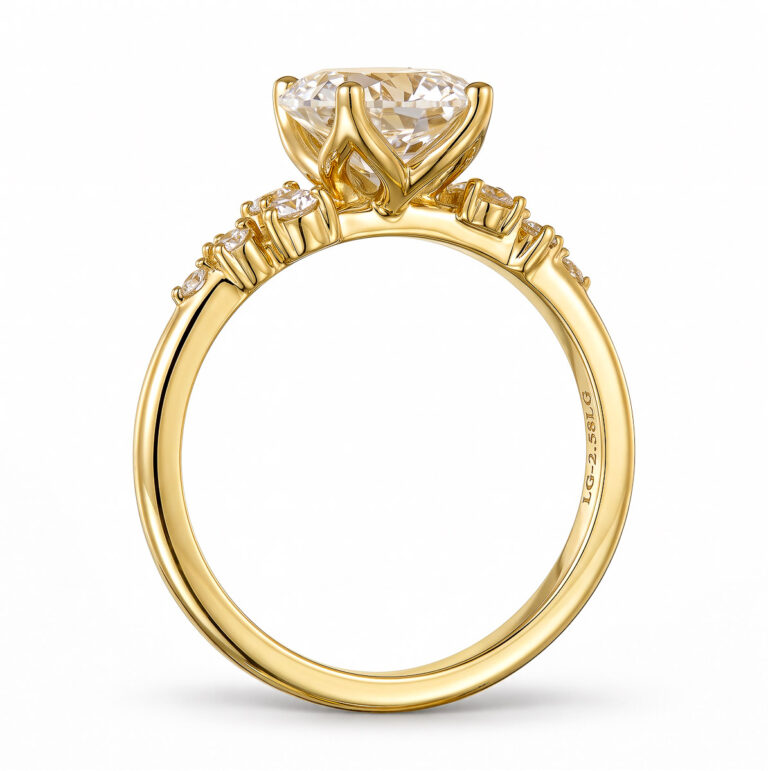
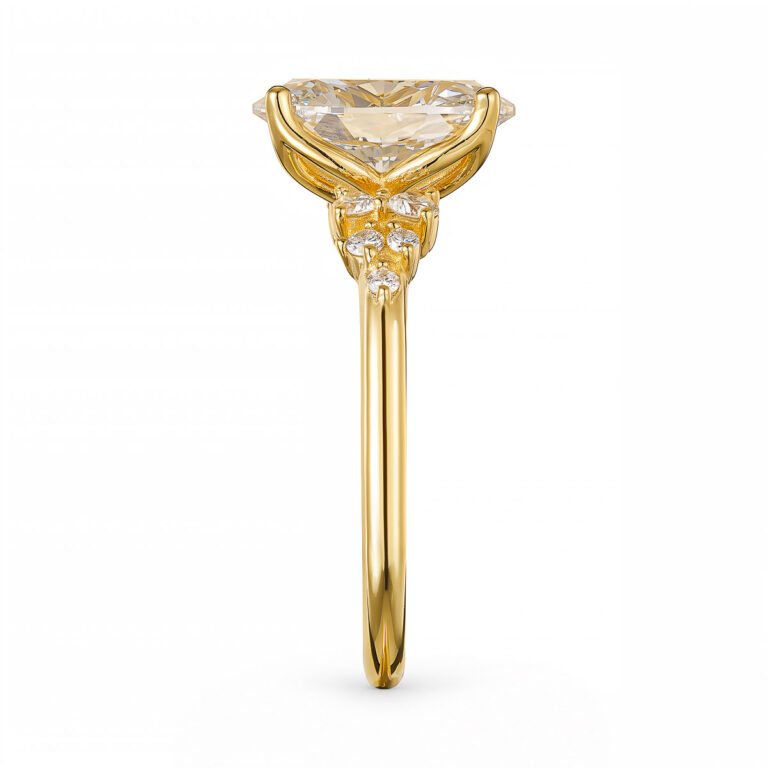
The customer should be able to see the jewellery from more than one angle.
A useful image set can include:
main product photo
a second angle
a side or rear view where needed
a close-up detail photo
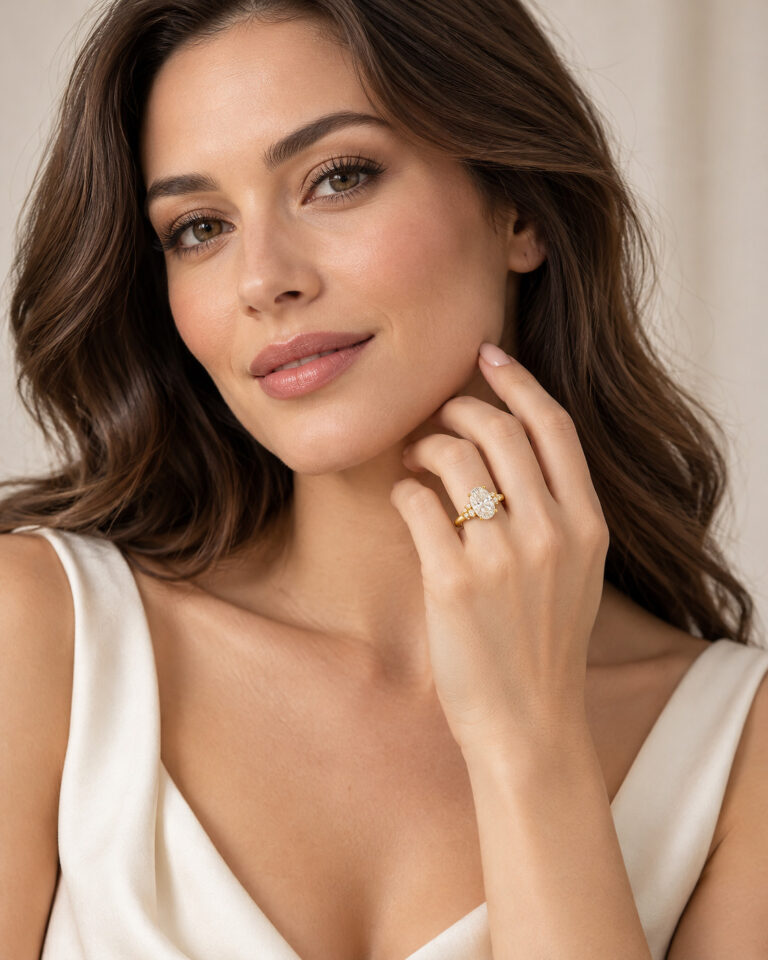
a photo worn by a person
video or 360° for products where it adds genuinely useful information
Not every product needs all of the above.
The key is that each additional image should show something that is not already visible in the previous one.
3. How many photos does a piece of jewellery need?
There is no single correct number for every product.
For a simple piece of jewellery, 3 well-chosen photos are often enough:
main image
a second angle
one useful detail
A more expensive or complex product may need 4-6 images, a model shot or video.
A few useful images are better than many almost identical ones.
4. The real size needs to be clear
On screen, two pieces of jewellery of very different sizes can easily look the same if they are photographed to fill the frame in the same way.
Dimensions in the product description are essential, but they are not always enough.
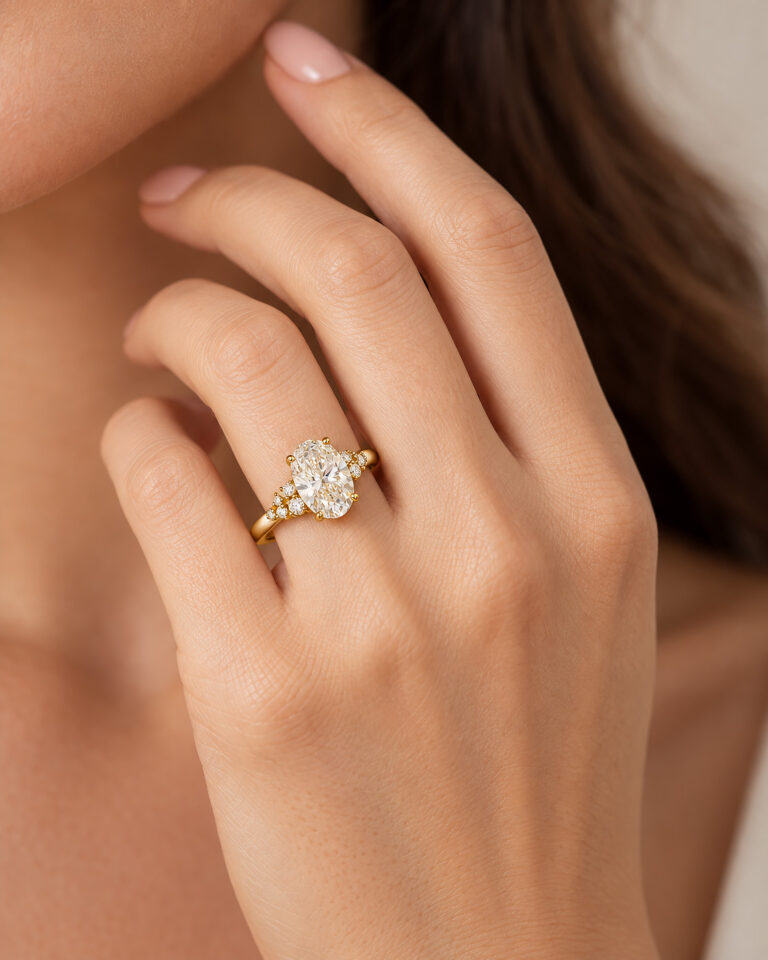
A photograph of the jewellery worn by a person helps the customer immediately understand its real size and proportions.
This does not need to be done for every SKU in a large catalogue.
It can be used for best sellers, core collections, more expensive products, or designs where the scale is not easy to understand from product-only images.
5. Details matter
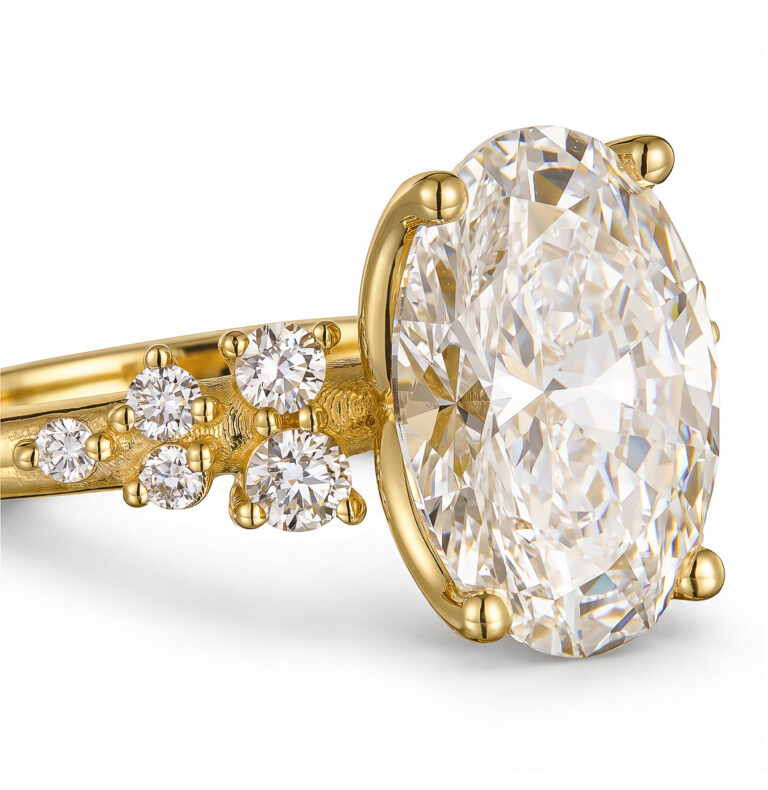
With jewellery, much of the value is found in the small details.
A close-up can show:
stones
pavé
engraving
metal texture
distinctive finishes
clasps
construction details
Not every simple product needs macro photography.
But when the quality or value of the jewellery lies in the details, a close-up image becomes very important.
6. Lighting is critical
Jewellery is one of the most demanding product categories to photograph.
Polished metal surfaces reflect almost everything around them. Stones require a different lighting approach from metal.
If only very soft, even light is used, the result can look clean but flat.
Good lighting should create:
volume in the metal
controlled reflections
contrast
accurate colour rendering
sparkle in the stones without losing detail
This is one of the main reasons jewellery photography requires a specialised setup.

7. The jewellery needs to be sharp throughout the required depth
In close-up jewellery photography, it is easy for one part of the product to look sharp while another becomes blurred.
In a creative photograph, that may be a deliberate choice. In an e-commerce product photo, however, the customer needs to be able to inspect the jewellery.
The main product photo should have a sufficiently deep depth of field so that all important parts of the product appear sharp and detailed.
This is worth checking in the images you receive and specifying clearly to your photographer.
A piece of jewellery that is sharp in only a very small area may look striking, but it is not the best choice for a well-designed product page.
8. Retouching should clean up, not change the product
Macro photography reveals dust, tiny scratches, fingerprints and marks that may be almost invisible to the naked eye.
For this reason, retouching is an important part of professional jewellery photography.
Retouching, however, should not change:
the true colour of the metal
the colour of the stone
the shape of the jewellery
its proportions
the essential construction details
The aim is to present the real product accurately, not to create a different piece of jewellery.
9. The whole catalogue needs a consistent style
In an online shop with hundreds or thousands of products, consistency is extremely important.
If every piece of jewellery has a different angle, a different size within the frame and different lighting, the catalogue looks disorganised.
Before a large shoot begins, you should define:
the main angle
product position
size within the frame
background
shadow
contrast
retouching level
The same standard should then be applied across the entire collection.
For a large online shop, this consistency is often more important than one individually impressive photograph.
10. White background, lifestyle, or both?
They serve different purposes.
A clean product photograph helps the customer examine the jewellery.
A lifestyle photograph creates atmosphere and shows how the jewellery looks when worn.
For a strong product page, the best solution is often a combination of both.
The main image can be clean and neutral, while the gallery can then include a model shot or a more creative image.
11. Do you need video or 360°?
Not for every product.
But for premium jewellery or products with distinctive construction, it can provide information that is difficult to communicate with static images alone.
Movement shows the following more clearly:
sparkle
reflections
the true shape
how the stones react to light
Video or 360° should complement the photographs, not replace them.
12. Not every product needs the same budget
A large online shop does not need to photograph every product as if it were part of an advertising campaign.
A simple system can be used:
Core products: 2-3 photographs.
More important products: additional angles, macro images or a model shot.
Premium products: a full image set, model shot, video or 360°.
This allows the production budget to reflect the real commercial value and needs of each product.
Jewellery Photography at Light & Dark Studio
Jewellery photography is one of Light & Dark Studio’s core specialisms.
We have extensive experience not only with individual advertising images, but also with producing large e-commerce catalogues where consistent quality must be maintained across hundreds or thousands of products.
Our work includes large jewellery catalogues for companies such as Haritidis and Roros.
Light & Dark has more than 15 years of experience in professional product photography and has created more than 200,000 product photographs.
This allows us to approach jewellery photography not only as creative work, but also as an organised production process for e-commerce.
See more about our professional jewellery photography and examples of our work.
A strong product page does not need as many photographs as possible.
It needs the right photographs so the customer can understand the jewellery before buying it.
For more examples and recent work: